Entering 2026: Building Digital Systems That Don’t Break as You Grow
Zensark AI Division
JANUARY, 06 2026
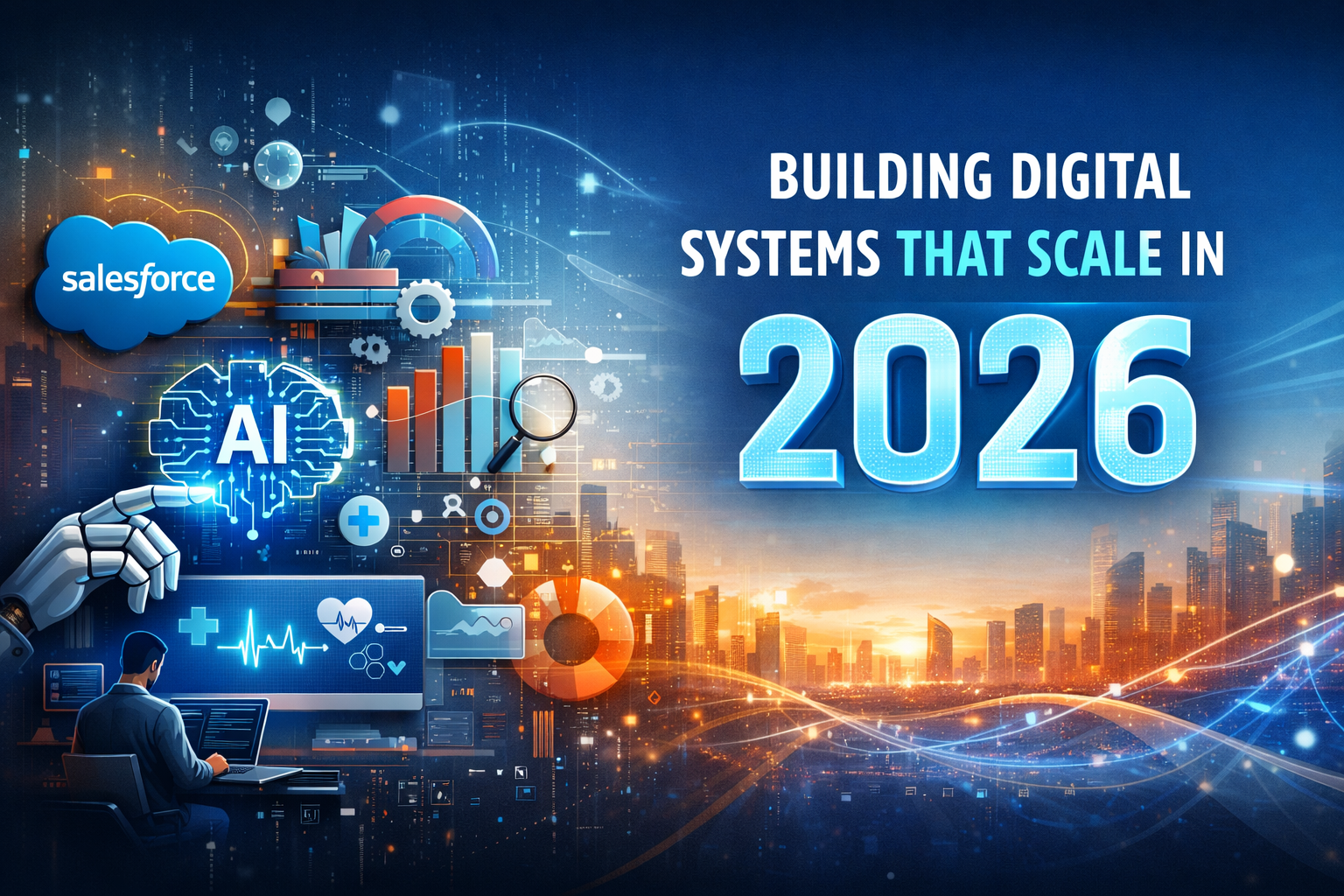
As we step into 2026, most organizations aren’t asking whether to invest in technology anymore. That question was answered years ago.
The real question now is far more practical—and far more important:
Is our technology actually helping us move faster, or is it quietly slowing us down?
Many enterprises today have powerful tools—CRMs, analytics platforms, automation layers, cloud infrastructure. Yet leaders often feel friction where there should be flow.
- Sales teams struggle with adoption.
- Operations rely on workarounds.
- Data exists, but insights arrive late.
This isn’t a tooling problem. It’s a design and execution problem.
The Big Shift We’re Seeing in 2026
They are moving away from:
- Rigid, over-engineered implementations
- Heavy customization without long-term thinking
- Vendors who “deliver and disappear”
And moving toward:
- Modular, scalable architectures
- AI embedded directly into workflows
- Systems designed to evolve with the business
- Partners who think like internal teams
Technology is no longer treated as a project—it’s treated as a living system.
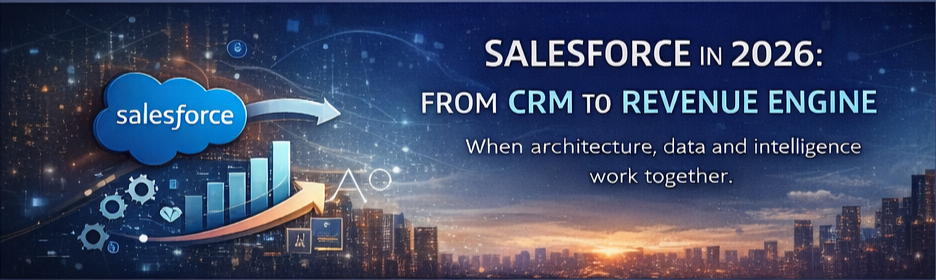
Salesforce Is No Longer Just a CRM
In 2026, Salesforce has become the backbone of how many organizations operate revenue, service, and customer experience.
But there’s a clear difference between companies that own Salesforce and those that are owned by it.
The difference lies in:
- How clean and flexible the data model is
- Whether workflows reflect real business behavior
- How often the system is reviewed and optimized
- Whether intelligence is built into daily usage
When Salesforce is designed thoughtfully, it becomes a revenue operating system—not just a record-keeping tool.
AI Has Matured—Expectations Have Too
- Reduce manual effort
- Improve decision-making
- Support frontline teams in real time
- Deliver measurable outcomes
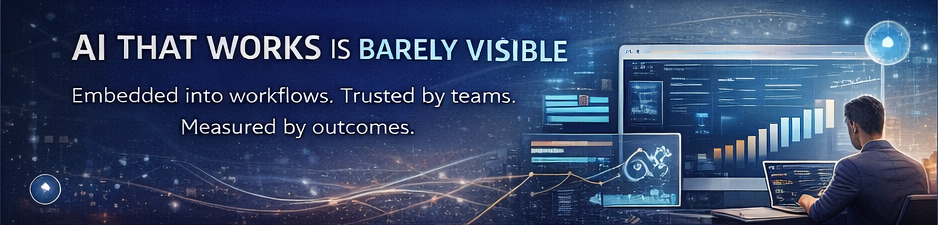
The organizations seeing real value are embedding AI quietly into processes—call analysis, forecasting, recommendations, automation—rather than showcasing it as a separate feature.
AI works best when users barely notice it’s there.
Regulated Industries Don’t Have the Luxury of Guesswork
In sectors like healthcare and regulated enterprises, the stakes are higher.
Performance, compliance, security, and scalability all matter—simultaneously.
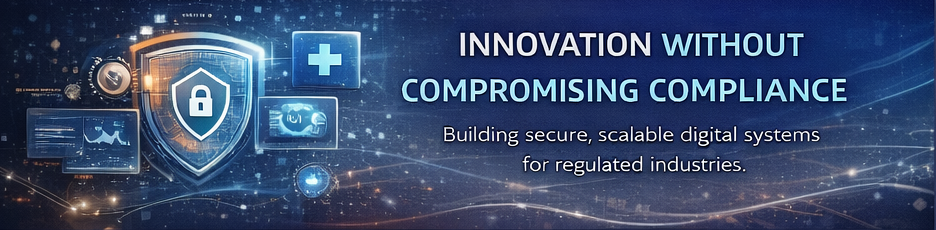
Generic solutions rarely fit well here. What works is custom-built, domain-aware systems that respect both business urgency and regulatory reality.
Why the Idea of a “Technology Vendor” Is Fading
One clear pattern in 2026:
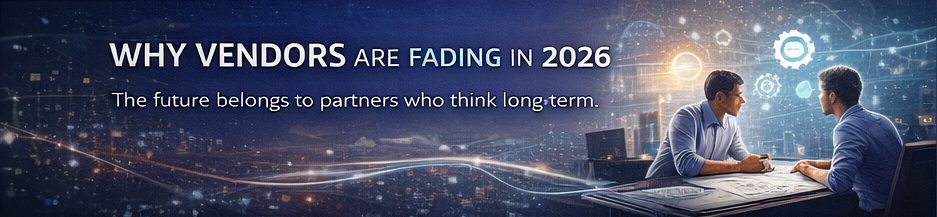
Organizations are no longer looking for vendors who just execute tickets.
They want partners who:
- Understand business context
- Anticipate scale and change
- Bring depth across AI, Salesforce, cloud, and UX
- Stay accountable beyond go-live
This is where Zensark naturally fits—working with teams that want clarity, continuity, and systems that simply work.
- Not louder technology.
- Just smarter execution.
Looking Ahead
The companies that will win in 2026 are not the ones adopting the most tools—but the ones building systems that adapt, learn, and scale.
The future belongs to organizations that:
- Design with intent
- Build with flexibility
- Embed intelligence early
- Choose partners who think long-term
📩 Connect with us today at info@zensark.com, to build future-ready systems that scale with confidence.